Rainbow Trout/Steelhead (Oncorhynchus mykiss)
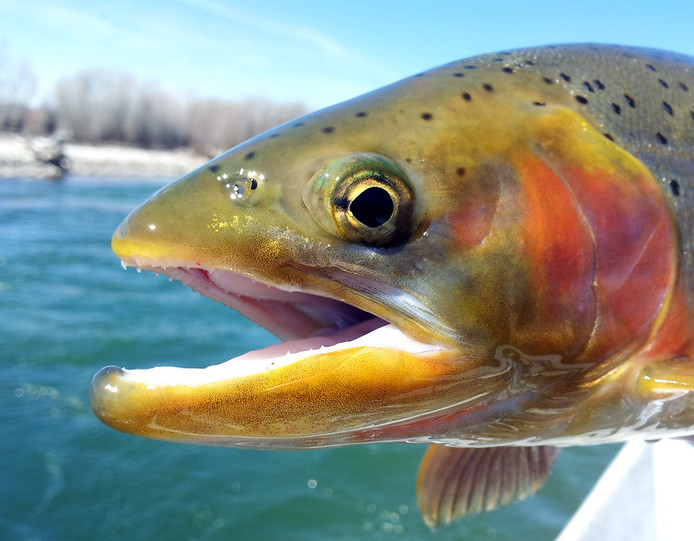


The rainbow trout/steelhead is an iconic and charismatic native fish species found in Northern California’s coastal areas. Rainbow trout and steelhead are two forms of the same species, rainbow trout staying in freshwater streams throughout their life while steelhead spawn in freshwater but spend part of their life in the salt water of the ocean. Steelhead in the NatureCheck area of focus are federally listed as threatened.
What metrics determine the health of this indicator?
Metric 1
Percent of years that surveyed streams within each watershed supported at least three age classes.
Caution
Unchanging
Moderate Metric 1
Percent of years that surveyed streams within each watershed supported at least three age classes.
Geographic Area


Condition Thresholds
Good
All years a watershed’s streams were surveyed over the 10-year period had three or more rainbow trout/steelhead age classes present.
Caution
Some years a watershed’s streams were surveyed over the 10-year period had three or more rainbow trout/steelhead age classes present.
Significant Concern
None of the years a watershed’s streams were surveyed over the 10-year period had three or more rainbow trout/steelhead age classes present.
Metric Current Health Findings
Current Condition
- Pinole Creek watershed (Significant Concern). The only stream surveyed within the Pinole Creek watershed is Pinole Creek. Pinole Creek was surveyed in six years of the 10-year monitoring period, and fish two years or older, or more than two age classes, were not detected during any survey year.
- Wildcat Creek watershed (Good). The only stream surveyed within the Wildcat Creek watershed is Wildcat Creek. Wildcat Creek was surveyed in nine years of the 10-year monitoring period, and three age classes were present during all survey years.
- San Leandro Creek watershed (Caution). Streams within this watershed were surveyed in all 10 years of the 10-year monitoring period. Three age classes were present during 80% of the 10-year survey period.
- Alameda Creek watershed (Good). Streams within this watershed were surveyed in all 10 years of the 10-year monitoring period. Three age classes were present during 70% of the 10-year survey period; including snorkel surveys in this analysis increased the percentage to 100%.
Current Trend
- Pinole Creek watershed (Unknown). Several factors may account for the lack of observations of rainbow trout/steelhead two years or older. Given that all age classes present were likely not detected, there is inadequate information to describe the trend during the 10-year survey period.
- Wildcat Creek watershed (Unchanging). Three age classes were present during each survey year. Therefore, the trend is unchanging during the 10-year survey period.
- San Leandro Creek watershed (Unchanging). Three age classes were present during eight years of the 10-year year survey period. The two years that three age classes were not observed corresponded to peak drought years (2014–2015), but three age classes were present in subsequent survey years (2016–2019).
- Alameda Creek watershed (Unchanging). When snorkel survey data were included, three age classes were present during each year of the 10-year survey period. Therefore, the trend is unchanging during the survey period.
Current Confidence
- Pinole Creek watershed (Low). Several factors may account for the lack of observations of rainbow trout/steelhead two years or older.
- Wildcat Creek watershed (Moderate). There is robust and consistent data during the survey years, but surveys were conducted in nine years of the 10-year period.
- San Leandro Creek watershed (Moderate). There is robust and consistent data during the survey years, but relative survey effort was lower in the two years that only two age classes were observed.
- Alameda Creek watershed (High). Surveys were conducted every year of the 10-year period, and sampling was adequate (with the addition of snorkel survey data) to detect all ages present.
Rationale - Why It's Important
The presence of three or more rainbow trout/steelhead age classes demonstrates that populations are reproducing and fish are surviving over multiple years, resulting in self-sustaining populations. The metric is evaluated by determining the percent of years during the 10-year period (2010–2019) that surveyed streams in each watershed supported at least three age classes. When survey data were not available for each of the 10 years, the calculation was made using data from the years surveys were conducted. The self-sustaining rainbow trout/steelhead metric is based on assumptions that were not verified as part of the analysis. The analysis timeframe is assumed to cover multiple rainbow trout/steelhead generations and a variety of water-year types, sampling is assumed to be spatially and temporally adequate to detect all age classes when they are present, and fish age determinations are assumed to be accurate. Where these assumptions may have been violated is discussed in specific watershed sections that follow.
Goal
Maintain or increase the number of streams and watersheds that support self-sustaining rainbow trout/steelhead populations.
Baseline Description
The baseline for this metric was set using data from 2010–2019.
Metric 2
Adult steelhead ability to volitionally move upstream from San Francisco Bay to reach suitable spawning and rearing habitat, and/or an adfluvial rainbow trout population exists.
Good
Unchanging
High Metric 2
Adult steelhead ability to volitionally move upstream from San Francisco Bay to reach suitable spawning and rearing habitat, and/or an adfluvial rainbow trout population exists.
Geographic Area

Condition Thresholds
Good
Adult steelhead can move upstream from the bay, and/or adfluvial rainbow trout can move upstream from reservoirs under some flow regimes to reach suitable spawning and rearing habitat.
Caution
Adult steelhead cannot move upstream from the bay under any flow regime to reach suitable spawning and rearing habitat, and adfluvial rainbow trout are not present; suitable stream habitat for resident rainbow trout persist annually.
Significant Concern
Adult steelhead cannot move upstream from the bay under any flow regime to reach suitable spawning, and adfluvial rainbow trout are not present; suitable stream habitat for resident rainbow trout does not always persist annually.
Metric Current Health Findings
Current Condition
- Pinole Creek watershed (Good). Pinole Creek supports steelhead that can reach suitable spawning and rearing habitat.
- Wildcat Creek watershed (Significant Concern). Wildcat Creek does not support anadromous steelhead or adfluvial rainbow trout. This is of significant concern because extirpation of rainbow trout/steelhead in this watershed occurred in the 1970s when the stream completely dried; the trout population was subsequently restocked with fish from the San Leandro Creek watershed.
- San Leandro Creek watershed (Good). Upper San Leandro Reservoir supports an adfluvial rainbow trout population, and anadromy may occur in the lower reach of San Leandro Creek.
- Alameda Creek watershed (Good). Calaveras and San Antonio Reservoirs support adfluvial rainbow trout populations, and anadromy occurs in the lower reach of Alameda Creek.
Current Trend
- Pinole Creek, Wildcat Creek, and San Leandro Creek watersheds (Unchanging). The presence/absence of anadromous steelhead or adfluvial rainbow trout populations in these watersheds is not expected to change in the near future.
- Alameda Creek watershed (Improving). Although the presence of adfluvial rainbow trout already results in a watershed condition of good, completed and soon-to-be-completed restoration projects will improve conditions by allowing volitional steelhead passage.
Current Confidence
Pinole Creek watershed (High). Numerous surveys have documented the presence of steelhead in Pinole Creek.
Wildcat Creek watershed (High). There are known barriers to steelhead movement between the bay and EBRPD lands. Rainbow trout cannot move freely between the lake and downstream habitat because of the spillway and dam.
San Leandro Creek watershed (High). Numerous surveys conducted within this watershed have documented that the Upper San Leandro Reservoir and its associated tributaries support an adfluvial rainbow trout population.
Alameda Creek watershed (High). Numerous surveys conducted within this watershed have documented both steelhead trying to move upstream and adfluvial populations in Calaveras and San Antonio Reservoirs.
Rationale - Why It's Important
This metric measures the ability of adult steelhead to volitionally move upstream from San Francisco Bay to reach suitable spawning and rearing habitat, and/or the existence of an adfluvial rainbow trout population. The presence of adult steelhead indicates that streams are free of migration barriers during at least some flow regimes, provides potential for gene transfer between populations, and may allow the species to repopulate after local extirpation events. Similarly, adfluvial populations provide resiliency; rainbow trout in reservoirs can potentially repopulate streams after periods of extended drought. Small numbers of steelhead and/or adfluvial adults can also contribute significantly to populations by producing larger numbers of eggs than resident fish.
Goal
Maintain or increase the number and size of anadromous and/or adfluvial populations.
Baseline Description
• Pinole Creek watershed: Pinole Creek supports steelhead; it is free of impassible barriers, and adult steelhead spawning is regularly documented. Over the past 20 years, steelhead have sporadically been observed in the creek, and steelhead redds have been observed on the EBMUD watershed in four of the five years since the Pinole Creek Fish Passage Project under Interstate 80 was completed in 2016. During the 10-year period from 2010 to 2019, 14 steelhead redds were documented by EBMUD fisheries biologists, despite limited annual spawning surveys that covered less than one-third of the available spawning habitat.
• Wildcat Creek watershed: This watershed does not support anadromous or adfluvial populations. While Lake Anza supports native rainbow trout, these fish cannot move freely between the lake and downstream habitat because of the spillway and dam. Additionally, rainbow trout can move upstream from the lake only during infrequent high-flow events; during those rare events, fish can access upstream habitat for only a very short distance (to the Botanical Garden). Due to these factors, rainbow trout in Wildcat Creek do not function as an adfluvial population.
• San Leandro Creek watershed: The creek may support anadromy in its lower reach and supports adfluvial rainbow trout above the Upper San Leandro Reservoir. There are no impassible barriers from San Francisco Bay to approximately five miles upstream, at the Lake Chabot Dam; anadromy may occur in the lower reach. Upper San Leandro Reservoir and its associated tributaries support an adfluvial rainbow trout population. None of the main tributaries of the Upper San Leandro Reservoir have barriers that would prevent adult rainbow trout from reaching suitable spawning habitat.
• Alameda Creek watershed: The watershed supports adfluvial rainbow trout. The southern portion of the watershed has adfluvial populations that use tributaries to the Calaveras Reservoir (Arroyo Hondo) and the San Antonio Reservoir (San Antonio, La Costa, and Indian Creeks). Projects have been completed, with some still underway, to restore volitional steelhead passage (i.e., anadromy) to some spawning and rearing habitats within upper Alameda Creek and its tributaries.
About this Indicator
The rainbow trout/steelhead (Onchorhynchus mykiss) is an iconic and charismatic native fish species found in Northern California’s coastal areas, making it a compelling tool for public engagement and environmental education. The Central California Coast Steelhead, which is found in the area of focus, is federally listed as threatened. Resident rainbow trout are not state or federally protected, but maintaining and enhancing their populations are natural resource management priorities because of the species’ current limited distribution and their important ecological functions. In addition, resident populations are adapted to local conditions and may provide important sources for re-establishing populations in other local streams as they are restored. The East Bay Regional Park District (EBRPD), East Bay Municipal Utility District (EBMUD), and San Francisco Public Utilities Commission (SFPUC) are the only Network partner agencies that have self-sustaining rainbow trout/steelhead populations in their watersheds. These agencies conduct regular fisheries surveys to document and track population trends and to provide data to assist in evaluating the health and management of this and other species.
Why is This Resource Included?
Rainbow trout/steelhead are ideal stream health indicators because they require a variety of habitat conditions to thrive, including cold waters with adequate dissolved oxygen concentrations, riffles with suitable spawning substrates, rearing habitat (perennial, shaded flatwater), and habitat-enhancing features that provide structure and cover. They also play an important role in the food chain, both as predators for a variety of invertebrates and small fishes and as food sources for numerous mammal and bird species (as well as other fishes). The presence of adult steelhead indicates that streams are free of complete migration barriers, providing opportunities for gene transfer between anadromous and resident populations and for repopulation of the species after local extirpation events. Adfluvial rainbow trout — with spawning adults producing juveniles that rear in reservoir tributary streams before returning to these larger bodies of water to feed as subadults and adults—allow the species to retain some steelhead life-history traits in the absence of ocean access.
Desired Condition and Trend
The desired condition of this indicator is to maintain or increase the number of streams managed by Network partner agencies that support self-sustaining rainbow trout/steelhead populations, and for these populations to be resilient over time (i.e., an unchanging or improving trend would indicate that they are able to persist through and recover after periods of stress, such as drought and climate change).
Current Condition and Trend
Rainbow trout/steelhead were historically present in all three area of focus subregions. Although the aquatic landscape in the area of focus has changed dramatically, including reservoir and diversion construction, urbanization, and habitat loss, streams here continue to support rainbow trout/steelhead populations. Currently, this species is only present on lands managed by Network partner agencies in the East Bay Hills and Mt. Hamilton subregions. As of 2021, Pinole Creek is the only stream on Network partner agency lands that supports complete volitional steelhead anadromy. However, projects in Alameda Creek (primarily in the Mt. Hamilton subregion) to restore anadromy to some of the watershed’s upper reaches are in various stages of completion, and several have been finished. San Leandro Creek may support anadromy in its lowest reach from San Leandro Bay to Lake Chabot Dam. There are no major barriers in the lower reach, but anadromy has not yet been documented. Resident rainbow trout populations occur in multiple streams within the area of focus, with some supported by fish exhibiting adfluvial life histories due to dams and their associated reservoirs.
Given that rainbow trout/steelhead have the ability to move between connected streams and their tributaries and use a variety of habitats for different life stages, surveyed streams were grouped and their condition evaluated at the watershed level. Pinole Creek, Wildcat Creek, and San Leandro Creek watersheds are located entirely within the East Bay Hills subregion. The majority of the Alameda Creek watershed is located within the Mt. Hamilton subregion, with the portion downstream (west) of Highway 680 within the East Bay Hills subregion. The current condition, trend, and confidence is the average of the condition, trend, and confidence for rainbow trout/steelhead in each watershed. As appropriate, best professional judgment was also used. These metrics give us a way to measure the difference between what is described in this section (i.e., how things are now) and the desired condition and trend in the preceding section (i.e., what we think “healthy” is for this indicator).
Stressors
Climate Change
Climate change is altering hydrologic conditions, changing water temperatures, decreasing water quality, lowering dissolved oxygen levels, increasing the frequency of droughts, and causing more dramatic or unseasonable rain events (when they do occur). Periods of drought can also reduce spawning and rearing habitat, lessen habitat connectivity and in-stream mobility, and decrease food resources.
Direct Human Impacts
People, dogs, or cattle entering a stream can cause the direct loss of spawning habitat and redds (nests), harm fish, and change both stream and adjacent riparian habitat. The loss of riparian cover can increase water temperature, evaporation rates, and stream turbidity. Although much of the stream habitat in the area of focus is within open space managed and protected by Network partner agencies, upstream private parcels and downstream areas could experience heavy fishing pressure. Illegal poaching can also occur on Network partner agency lands.
Disease
The types of O. mykiss surveys conducted in the area of focus are not designed to detect or monitor diseases. However, we know climate change makes fish populations more susceptible to bacterial, viral, and fungal infections (Chiaramonte et al. 2016).
Habitat Disturbance/Conversion/Loss
Although much of the stream habitat in the area of focus is within open space managed and protected by Network partner agencies, many downstream areas have been heavily modified (e.g., channelized streams, passage barriers), lack riparian vegetation, and are subject to urban runoff.
Invasive Species Impacts
The presence of non-native wildlife (i.e., American bullfrogs [Lithobates catesbeianus], Centrarchids [sunfish and bass species]) can prey upon native fish and can lead to a loss of native fish biodiversity if they outcompete native species (Bunnell and Zampella 2008).
Passage Impediments/Barriers/Reservoirs
The presence of adult steelhead indicates that streams are free of complete migration barriers and provide some opportunity for gene transfer between anadromous and resident O. mykiss populations and potential for repopulation after local extirpation events. The absence of anadromy, or the inability of resident fish to move, makes O. mykiss populations more vulnerable to extirpation as populations become isolated and lack a source for repopulation and gene transfer.
Pollution/Contaminants
Toxic substances from spills or runoff can enter streams and reservoirs directly or through storm drains, resulting in direct harm to aquatic species and their habitat. Mercury from old mines, which continues to seep into water bodies, bioaccumulates up the food chain. Longer-living or predatory fishes can contain elevated levels of mercury, which can be harmful to humans or wildlife when consumed in high amounts.
Sedimentation/Excess Sediment Load
Sedimentation/excess sediment load: Excessive sedimentation (e.g., as a result of increased intermittent flow patterns from altered weather patterns, increased erosion from recreational trail usage, increased development, lack of riparian vegetation) alters and reduces usable fish habitat by increasing the proportion of fine sediment in riffles and filling pools. Fine sediments also have the potential to impact fish forage by either reducing benthic macroinvertebrate densities or altering community characteristics (Scheurer et al. 2009).
Additional Resources
Other Metrics Considered but Not Included
- Condition factor: Condition factor reflects the physical attributes of individual fish, including the relationship between length and weight, and is typically used to evaluate their health. The metric has the potential to provide valuable insight into the health of discrete O. mykiss populations. However, existing datasets lack key and/or consistent information, such as body condition measures and the presence of lesions or parasites. Although some length and weight data are collected, the available information alone was not sufficient to provide a useful condition-factor measure in all of the watersheds being evaluated. Collecting relevant and consistent data to determine condition factor is being explored for future survey efforts and subsequent updates to the ecological health assessment.
- Out migrants and stream flows: The number of out-migrant smolts and the suitability of flows during the out-migration season were considered as metrics. Relevant data, however, is only available for one of the watersheds in the evaluation (Alameda Creek).
- Catch per unit effort: This provides indirect measures of the abundance of individual species. The metric was eliminated from consideration because lower values for O. mykiss may be due to streams’ carrying capacity, as opposed to less-healthy populations.
- Presence in suitable habitat: A metric examining the number of streams (as a percentage) that have both suitable habitat and O. mykiss populations was rejected for the following reasons: (1) the focus of this analysis is on population health, not stream health; (2) data relevant to “suitable habitat” are not available for all streams being evaluated; (3) O. mykiss can persist in a variety of habitat conditions; and (4) complications associated with data handling for streams in which only portions provide suitable habitat.
- The National Marine Fisheries Service’s Coastal Multispecies Recovery Plan for California Coastal Chinook Salmon, Northern California Steelhead, and Central California Coast Steelhead. Developing a metric based on the goals of the Steelhead Recovery Plan was rejected because it only considers major watersheds, which excludes most streams in the area of focus.
Data Gaps and Data Collection/Management Needs
- Fish survey data are not available for all primary and secondary streams within the area of focus.
- Habitat quality data are not available for all survey reaches.
- Survey methods and the type of data collected vary among Network partner agencies.
- Not all streams and stream reaches within the area of focus are surveyed.
Past and Current Management
Network partner agencies monitor O. mykiss populations annually using electrofishing (EBRPD, EBMUD, SFPUC), out-migrant trapping and snorkel surveys (SFPUC), and PIT tag antennae array monitoring (SFPUC). EBMUD participated in the Pinole Creek Fish Passage Improvement Project, which included the removal of a migration barrier under Interstate 80; with its removal, steelhead have access to upstream areas under most flow conditions. Projects in Alameda Creek have been completed, are underway, or are planned to restore volitional anadromy to some of the watershed’s upper reaches. In the San Leandro watershed, projects have been completed and are currently underway to improve access to habitat for resident and adfluvial O. mykiss populations. Most notable is the daylighting of nearly 3,500 linear feet of Alder Creek, a tributary of Upper San Leandro Creek, which was previously culverted underground. This newly accessible habitat will provide four acres of suitable spawning and rearing habitat for rainbow trout. In addition, EBRPD removed a culvert in Upper San Leandro Creek that was a partial trout barrier, replacing it with an arched culvert. This project makes available nearly one mile of suitable upstream trout habitat. Other notable projects currently in the planning/design phases in Wildcat Creek include removing a migration barrier at Brook Road downstream of Lake Anza, assessing the feasibility of creating a fish passage around Jewel Lake, and improving the function of the fish ladder in Richmond.
Potential Future Actions
- Coordinate on data collection and use methods with Network partner agencies.
- Continue to work together to coordinate and share data.
- Explore opportunities to better standardize survey protocols and collect data that allow better comparisons between fish populations in Network partner agency watersheds.
- Identify opportunities for enhancing fish-bearing stream habitat and removing potential fish passage barriers.
Key Literature and Data Sources
For additional information about this indicator including key literature and data sources see NatureCheck