Executive Summary
NatureCheck Executive Summary
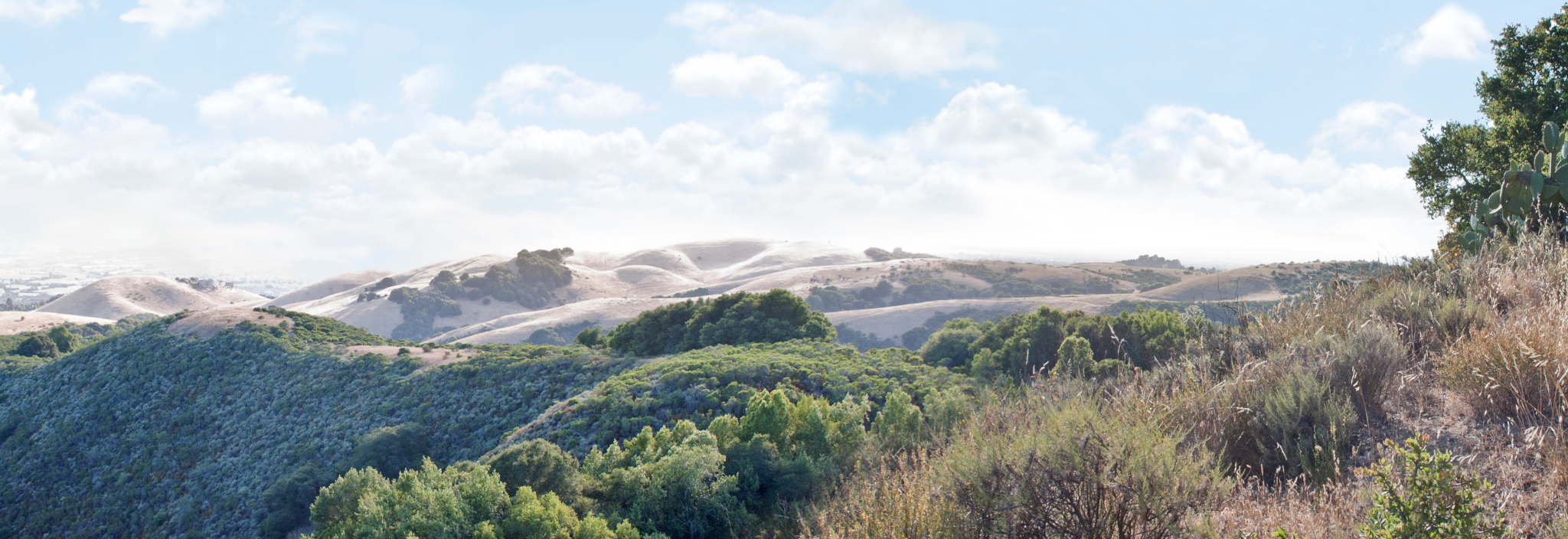
NatureCheck is a report on a landscape-scale ecological assessment of wildlife within East Bay Stewardship Network (EBSN) lands in Alameda and Contra Costa Counties, California.
A science-based snapshot, NatureCheck looks at the condition and trend of select wildlife species deemed to be good indicators of the region’s ecological health and for which we either have or are in the process of collecting data. As the first such ecological health assessment for the East Bay region, the project developed quantitative metrics for each indicator to measure change over time. The original 2022 report established a baseline and each indicator will be updated regularly or at least every 5 years. Understanding and tracking these changes will help us better manage these lands to support their ecological integrity and resiliency.
This report crosses jurisdictional boundaries and pools data from the area of focus and beyond. This includes publicly owned EBSN partner lands managed by California State Parks (CSP), Contra Costa Water District (CCWD), East Bay Municipal Utility District (EBMUD), East Bay Regional Park District (EBRPD), and San Francisco Public Utilities Commission (SFPUC).
Together, these EBSN partner agencies oversee and care for more than 225,000 acres, or almost 25% of the land in Alameda and Contra Costa Counties. Their parks, open spaces, conservation areas, and reservoirs are home to the watersheds that provide clean drinking water, habitats that preserve the biodiversity and ecosystem functions the world depends upon, and expansive outdoor spaces for public enjoyment.
The extent and importance of the undeveloped, protected lands we manage are significant. When considered together, they are crucial to the landscape connectivity essential for maintaining viable plant and animal populations. They buffer a wide range of species from the impacts of recreational and environmental variability and provide migration routes that species can use as climate conditions change. They also offer refuges for California’s rare plants and wildlife, something that has become more and more precious as the majority of open space that was once present here has been developed, converted, or otherwise impacted.
Collectively, it is the responsibility of EBSN partner agencies to determine how best to manage these remaining ecosystems, given current realities and the 7,000,000-strong Bay Area population, which is projected to grow even larger. Therefore, we intentionally chose to establish this ecological baseline on existing conditions inclusive of modern anthropogenic stressors rather than use historical conditions to which we cannot realistically expect to return. Future updates to NatureCheck will reveal trends from the baseline that will indicate the health of our shared ecologies.
What We Have Learned about our Wildlife’s Ecological Health
NatureCheck will track indicators for fishes, amphibians and reptiles, birds, mammals, and plant communities. Baseline data were primarily from existing sources (2009–2020), including publicly available datasets such as iNaturalist and eBird; land-manager monitoring surveys, which often used disparate methods; and various research projects. This evaluation also identifies instances in which not enough is known to draw meaningful conclusions and opportunities for future research and collaboration between land managers.
Brief summaries of the indicator analyses follow.
Fishes
Native fishes and rainbow trout/steelhead (Oncorhynchus mykiss) were evaluated across four watersheds in the area of focus: Pinole Creek, Wildcat Creek, San Leandro Creek, and Alameda Creek. While non-native fish species are present in all four, they are primarily found in their lower reaches, due primarily to intrusions from human-made reservoirs. Alameda Creek retains the most diverse and productive native fish assemblage, likely because of its greater flow, multiple reaches, and relatively undisturbed upper watershed riparian habitat. Evidence from all four watersheds suggests that they support self-sustaining populations of rainbow trout/steelhead, a critical factor for their resiliency. Many salmonid populations are no longer able to move between the San Francisco Bay and these watersheds due to stream channelization, impoundments, diversions, and other in-channel barriers that have dramatically altered both hydrology and habitats. These conditions leave our isolated rainbow trout populations at a much greater risk of extirpation in the face of extensive drought. Ongoing efforts to restore the native ecosystem and provide connections to the bay will greatly improve the ecological health of our of salmonid-bearing streams.
Amphibians and Reptiles
NatureCheck looked at two indicator species, the federally listed California red-legged frog (Rana draytonii) and the California tiger salamander (Ambystoma californiense) and evaluated amphibian and reptile diversity for multiple species. Amphibians are experiencing an unprecedented global decline and are the most threatened class of vertebrates as a result of anthropogenic changes. It is heartening, then, to see some good news regarding local amphibian populations.
Using data collected between 2009 and 2019, we found that our amphibian indicator species are in good condition, and that the area of focus has good habitat for them. For example, a California red-legged frog study comparing coastal Bay Area populations to those in other parts of their range found that those in the Bay Area are genetically diverse and gene flow is high (Richmond et al. 2014). A recent paper (Moss et al. 2021) also showed that many of our native amphibian populations are resilient to drought and are able to recover to pre-drought occupancy levels during normal or above-average precipitation years. It appears that extreme drought helps reduce available habitat for invasive species such as the American bullfrog (Lithobates catesbeianus) and non-native fish. However, the data, which only went to 2019, did not reflect the effects of the extreme drought of 2020/2021. Future efforts to continue to support these species will include improved monitoring using a coordinated methodology across EBSN partner lands and continued pond restoration efforts to help increase drought resiliency.
Birds
Since 1970, North America has lost nearly three billion—or more than one in four—of its birds. This is due to a combination of factors, including climate change, invasive species, pesticide use, disease, altered fire regimes, noise, light and air pollution, human presence, and habitat degradation and fragmentation. Additionally, introduced squirrels, rats, and free-roaming cats can act as stressors through predation and usurpation of nest sites, especially where urban and suburban areas border the area of focus. Wind and solar energy production are also major sources of bird mortality. Nevertheless, an analysis conducted by Point Blue Conservation Science of 14 common riparian bird species in protected areas of Marin County showed that protected areas do effectively conserve populations of many bird species even in proximity to urbanization (Dettling et al. 2021).
One NatureCheck indicator focused on 28 bird species that were split into four guilds based upon habitat association (grassland, riparian, oak woodland, shrubland). Most bird species analyzed were present and abundant across the area of focus. Using 2010–2020 breeding-season data, the riparian, oak woodland, and shrubland birds showed a stable trend. However, grassland birds showed a declining trend, which is cause for significant concern.
The golden eagle (Aquila chrysaetos) is a fully protected species in California and was chosen as an indicator because it relies on multiple habitat types for foraging and nesting. The area of focus encompasses one of the densest golden eagle nesting populations in North America. Data show this species has maintained a consistent reproductive rate and territory occupancy, even with large-scale drought. However, data also suggest that this success is due to an increasing proportion of sub-adult birds entering the breeding population due to high adult mortality and therefore caution is warranted.
Mammals
Mammal habitat loss in the area of focus has been significant, primarily due to human encroachment and development. Other historical and ongoing factors, such as predator control, climate change, and pollution/contaminants, also affect mammals here. Existing data were used to look at a cross-section of species in different trophic levels as bellwethers of ecological health: the puma (Puma concolor), seven species of mesocarnivores, the dusky-footed woodrat (Neotoma fuscipes), the California ground squirrel (Otospermophilus beecheyi), and bats. While we have limited data on mammals, and therefore low confidence in our assessment, we believe the overall health of our mammal community is good.
However, we are cautious looking forward. Wide-ranging species with low population densities that are indicators of habitat quality and connectivity—such as the puma and the American badger (Taxidea taxus)—can be difficult to detect. In addition, this assessment lacks the key analyses of habitat connectivity and linkages essential to maintaining overall ecosystem stability and resiliency to habitat change. Finally, we have insufficient information to identify the trend for a historically widespread keystone species, the California ground squirrel.
Data Gaps
While we believe NatureCheck provides a good baseline for understanding the ecological health of our wildlife indicators, we also acknowledge critical data gaps. For example, we did not assess invertebrates such as insects, which are very good health indicators thanks to their fast reproduction, diversity (from generalists to extreme habitat specialists), and responsiveness to climatic change. We also need to improve our understanding of abiotic systems such as streams and wetlands. However, coming together as a EBSN to identify these critical missing pieces will allow us to focus our collective resources on priority areas. Indeed, we are already working to fill some of these data gaps, and will continue to develop other indicators and metrics as we work toward future updates of this report.
Where Do We Go from Here?
NatureCheck can help EBSN partners be better prepared to make appropriate decisions when responding to climate change, identifying and implementing restoration efforts, and improving the overall resiliency and health of our natural resources. We also hope to build additional partnerships with the public, our research community, and other local stakeholder groups and organizations. Together, we will do our best to steward and restore our precious wildlife resources and habitats
Literature Cited
Dettling, M.D., Dybala, K.E., Humple, D.L., and Gardali, T. (2021). Protected areas safeguard landbird population in central coastal California: Evidence from long-term population trends. Ornithological Applications, 123, 1-12.
Moss, W. E., McDevitt-Galles, T., Muths, E., Bobzien, S., Purificato, J., and Johnson, P. (2021). Resilience of native amphibian communities following catastrophic drought: Evidence from a decade of regional-scale monitoring. Biological Conservation, 263, 109352. https://doi.org/10.1016/j.biocon.2021.109352
Richmond, J. Q., Backlin, A. R., Tatarian, P. J., Solvesky, B. G., and Fisher, R. N. (2014). Population declines lead to replicate patterns of internal range structure at the tips of the distribution of the California red-legged frog (Rana draytonii). Biological Conservation, 172, 128–137.