California Red-legged Frog (Rana draytonii)
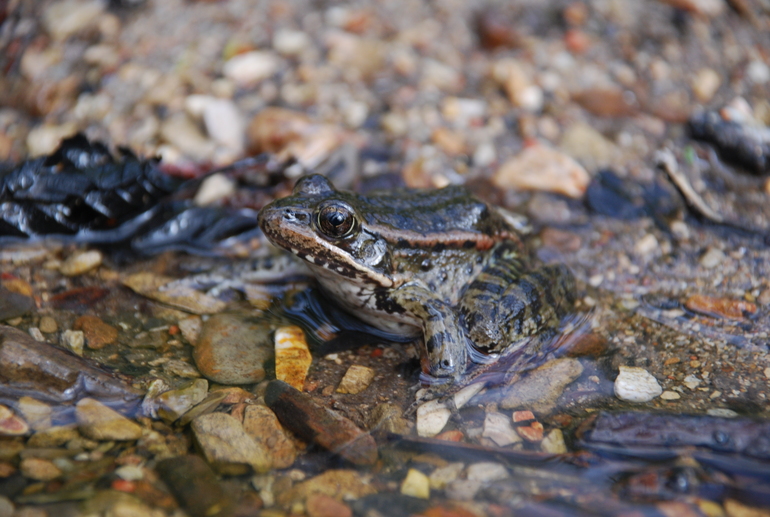


The California red-legged frog is found throughout much of the state. However, a decline in both numbers and distribution prompted the species’ listing under the federal Endangered Species Act. This frog is a good indicator because it can live for up to a decade, allowing us to assess the effects of both natural and anthropogenic changes over time.
What metrics determine the health of this indicator?
Metric 1
Estimated proportion of ponds where any CRLF life stage has been documented to be present in the last 10 years.
Good
Unchanging
Moderate Metric 1
Estimated proportion of ponds where any CRLF life stage has been documented to be present in the last 10 years.
Geographic Area


Condition Thresholds
Good
The number of ponds occupied by the CRLF in the area of focus is maintained, increased, or declines by less than 10% over the next 10 years.
Caution
The number of ponds occupied by the CRLF declines 10%-20% in the area of focus in the next 10 years.
Significant Concern
The number of ponds occupied by the CRLF declines more than 20% in the area of focus over the next 10 years.
Metric Current Health Findings
Current Condition
The current condition is Good based on available data but will be updated as trends are established.
Current Trend
Overall, when considering the entire area of focus, CRLF presence appeared Unchanging, with improving trends in one of three subregions and no clear trend in two of three subregions.
Current Confidence
Current confidence is Moderate. The designation of potential CRLF habitat was contingent on three components. (1) CRLF presence, which we recognize is a circular argument; however, a species’ use of a habitat indicates high confidence that the habitat is at least somewhat suitable (for occupancy, if not successful reproduction). If a pond did not have CRLF records, we still considered it as potential habitat provided that it had both (2) appropriate hydrology and (3) proximity to other CRLF populations. Our confidence in the hydrology component is moderate; we generally assumed that ponds had a sufficient hydroperiod unless survey data indicated that they consistently dried before September. We did not have hydroperiod data on all of the ponds surveyed, and for the presence analysis, did include ponds that were only surveyed once in a year. Ponds were also considered potential habitat based on sufficient proximity (< 3 km) to other CRLF populations. Our estimate of potential habitat is fairly conservative, as we may have excluded ponds that appeared to be isolated but may have been proximate to ponds that were occupied and not surveyed. Our confidence in this component is also moderate, as most of the seasonal to semi-permanent ponds that were likely CRLF habitat were probably surveyed within the 10-year span. Finally, we note that we only had recent survey data on 665 of the >1,100 ponds managed by Network partner agencies. Ponds without survey data were not considered in our analysis; however, there is a strong possibility that some of these ponds may also contain CRLF.
Rationale - Why It's Important
This metric was evaluated by determining the estimated number of ponds where any CRLF life stage had been found in the 10-year interval between 2009 and 2019. CRLF presence is relatively easy to monitor and is the most basic way to confirm habitat for adult or post-metamorphic frogs. We considered presence of the CRLF in ponds or wetlands that met the following criteria: They (1) had been surveyed during the breeding season at least once between 2009 through 2019, (2) did not appear to have too short a hydroperiod,18 and (3) were located within dispersal distance (3 kilometers [km]) of a known CRLF population or were observed having CRLF within the past decade. Ponds meeting these criteria were included in this analysis.
Goal
Maintain or increase the number of ponds occupied by the CRLF in the area of focus.
Baseline Description
The Network partner agencies manage a total of more than 1,100 ponds, 665 of which have been surveyed at least once in the past decade. Of these, we excluded 75 sites that were either unoccupied and isolated from other CRLF populations or had insufficient hydroperiods. This left a remaining 582 sites that could be designated as potential CRLF habitat. The CRLF has been documented at 49% (n = 285) of these sites within the past decade and is found across the area of focus. The proportion of sites that contain the CRLF varies by subregion, with the East Bay Hills and Mt. Diablo Range subregions having the highest proportion (East Bay Hills: 51%, 111 of 218 sites; Mt. Diablo Range: 50%, 122 of 243 sites). The lowest proportion was observed within the Mt. Hamilton subregion, where 52 of 121 of sites (43%) contained the CRLF.
Metric 2
Proportion of confirmed CRLF breeding sites within ponds in the last 10 years.
Good
Unchanging
Moderate Metric 2
Proportion of confirmed CRLF breeding sites within ponds in the last 10 years.
Geographic Area

Condition Thresholds
Good
The number of ponds occupied by breeding CRLF in the area of focus is maintained or increased, or decreases by less than 10%.
Caution
The number of ponds occupied by breeding CRLF in the area of focus declines by 10%–20% in the next 10 years.
Significant Concern
The number of ponds occupied breeding CRLF in the area of focus declines by more than 20% in the next 10 years.
Metric Current Health Findings
Current Condition
The current condition is Good for all subregions based on available data but will be updated as trends are established.
Current Trend
Breeding showed higher interannual variability than overall occupancy. There did not appear to be strong positive or negative trends in the Mt. Diablo Range or Mt. Hamilton subregions, but note that there were limited data for the latter. In the East Bay Hills subregion, we found evidence of a positive trend in CRLF breeding activity using statistical models. In this subregion, breeding was lowest at the beginning of the decade (2009–2011), with a predicted probability of just 11%, and significantly higher (P = 0.02) at the end of the decade (2018–2019), with a predicted probability of 19%. Overall, current trend is Unchanging.
Current Confidence
Breeding data are available for many of the ponds in the area of focus, but there is variation in survey timing. Confidence was High for the East Bay Hills subregion and Moderate for the Mt. Diablo Range subregion. Some partner agencies only have one or two seasons of survey data or do not conduct targeted CRLF surveys, and thus, may miss peak breeding windows. We urge caution and continued monitoring, especially in the Mt. Hamilton subregion, where confidence is Low. In addition, the presence of eggs and larvae may not represent the most accurate metric for successful breeding (i.e., recruitment). Surveys did not always discriminate between postmetamorphic stages and other juvenile stages, and thus, we grouped them in our analysis. However, metamorphic surveys are important for determining whether ponds support appropriate conditions for larval development. Several ponds consistently went dry by August but continued to exhibit evidence of CRLF breeding (i.e., eggs or larvae). It is not clear whether these sites produce CRLF that recruit into the population or whether they serve as sinks.
Rationale - Why It's Important
This metric assesses the estimated number of ponds that have confirmed CRLF breeding as determined by the presence of egg masses, larvae, or recent metamorphs. The identification of potential breeding habitat for Metric 1 has been used in this metric.
Goal
Maintain or increase the number of ponds occupied by breeding CRLF in the area of focus.
Baseline Description
Of 582 ponds with potential habitat for breeding (see Metric 1), 220 (38%) had evidence of CRLF breeding within the past decade. Many of the sites with no evidence of CRLF breeding (n = 362) were simply not surveyed extensively (236 had fewer than three years of summer survey data). Seventy-one sites included in this analysis were surveyed extensively, and yet did not contain breeding CRLF. More than one-third of these (26/71) contained invasive species (fish or bullfrogs), and an additional 48 were observed to be dry at least once during the breeding season. This suggests that poor survey data, invasive species, or insufficient hydroperiod explain why breeding CRLF were not detected at these ponds. We note that CRLF breeding did co-occur with invasive fish and bullfrogs at 11 and 24 ponds, respectively. The distribution of breeding largely mirrored overall occurrence, with the East Bay Hills and Mt. Diablo Range subregions having the highest percentage of sites with breeding observed in the past decade (East Bay Hills: 83/218 sites, 38%; Mt. Diablo Range: 97/239 sites, 41%) and the Mt. Hamilton subregion having the lowest (40/120 sites, 33%).
Metric 3
Number and size of CRLF metapopulations that exist across the area of focus, and the expansion or persistence of these metapopulations over the last 10 years.
Good
Unchanging
Moderate Metric 3
Number and size of CRLF metapopulations that exist across the area of focus, and the expansion or persistence of these metapopulations over the last 10 years.
Geographic Area
Condition Thresholds
Good
The number of metapopulations in the area of focus is maintained or increased over the next 10 years or declines by less than 10% over the next 10 years.
Caution
The number of metapopulations within the area of focus declines by 10%–20% in the next 10 years, or there is a loss of connectivity of 10%-20%.
Significant Concern
The number of metapopulations within the area of focus declines by more than 20% in the next 10 years, or there is a loss of connectivity of more than 20%.
Metric Current Health Findings
Current Condition
The current condition is Good based on available data but will be updated as trends are established.
Current Trend
Despite some shifts in the location of core sites, the trend in population connectivity overall appears to be Unchanging. To our knowledge, no new barriers to connectivity appeared within the past 10 years, and the position of core sites was such that the slight shift in the identity of core sites did not affect overall connectivity.
Current Confidence
Current confidence is Moderate. Our analysis did not account for land cover in between core sites, which could affect connectivity estimates. Sites within 3 km of each other could be separated by various barriers to dispersal such as roads or impervious land cover. Finally, we did not have population genetic analyses to support our inference that sites that cluster together spatially are functionally connected. Instead, we chose a connectivity metric based on dispersal distances estimated in previously published studies. The analyses are sensitive to this choice of dispersal distance.
Rationale - Why It's Important
CRLF populations are considered metapopulations, or a group of subpopulations that are separated spatially but interact through migration and gene flow (USFWS 2010, Marsh and Trenham 2001). Subpopulations are subject to local extinctions but may be recolonized by adult migrants and dispersing juveniles, which stabilizes the larger metapopulation (Marsh and Trenham 2001). The persistence of the metapopulation is dependent on the dynamics of the subpopulations (USFWS 2010). “Maintaining corridors for dispersal between breeding and non-breeding habitat and between populations is essential in preserving the population structure of the California red-legged frog” (USFWS 2010). The area of focus encompasses disparate land holdings supporting a number of East Bay CRLF metapopulations. The number, size, and connectivity of these metapopulations can be used as metrics for the health of the species. An additional useful metric is the number of potential CRLF sites that are isolated from metapopulations.
We estimated the number of metapopulations by analyzing the spatial proximity of core CRLF sites to one another. We defined “core sites” as ponds that consistently contained the CRLF, as defined by: (1) being consistently surveyed (having more than three years of survey data, including surveys prior to 2009) and having CRLF detections in >50% of the years it was surveyed, or (2) being inconsistently surveyed (three or fewer years) but having CRLF detections in 100% of the years. This allowed us to consider sites that have not been well-sampled but could serve as core sites.
We then defined “metapopulations” as clusters of sites that were within 3 km of each other, containing at least one core site. Because adult CRLF have been observed moving up to 2.8 km per year (Bulger et al. 2003; Fellers and Kleeman 2007), we considered 3 km to be the upper limit of dispersal and a realistic distance to define as a metapopulation. Sites belonging to the same cluster could be expected to exchange individuals and rescue one another from periodic extinction.
For each metapopulation, we calculated the centroid (the geographic center of all core sites within that cluster) and calculated a 3 km buffer from that centroid. This represents the area of metapopulation from which the CRLF could be expected to disperse. Several metapopulations had overlapping buffers, indicating some level of potential connectivity among them. Metapopulations that were within one another’s buffer area were defined as a habitat unit.
Goal
- Maintain or increase the number of metapopulations within the area of focus.
- Maintain or increase habitat connectivity via dispersal corridors and the upland habitat matrix.
- Maintain or increase percentage of ponds within CRLF dispersal distance.
Baseline Description
The Network partner agencies manage a total of 189 ponds that were designated as core CRLF sites. To our knowledge, these ponds contain 130 consistent CRLF populations and could serve as source populations for surrounding ponds. The majority (n = 182; 96%) of core sites were within 3 km of another core site and, on average, core sites were 845 m from the next nearest core site. This close proximity offers a high potential for population connectivity, meaning that metapopulation dynamics (e.g., demographic rescue) could be expected to occur. We defined 48 metapopulations; 33 of these metapopulations contained three or more core sites, and the largest contained 13 core sites. Click here for maps and baseline details.
Metric 4
Estimated number of ponds occupied by bullfrogs or predatory game fish.
Good
Unchanging
High Metric 4
Estimated number of ponds occupied by bullfrogs or predatory game fish.
Geographic Area
Condition Thresholds
Good
The number of ponds occupied by invasive bullfrogs or fish in the area of focus is maintained or decreases, or increases by less than 10% over the next 10 years
Caution
The number of ponds occupied by invasive bullfrogs or fish in the area of focus increases 10%-20% in the next 10 years.
Significant Concern
The number of ponds occupied by invasive bullfrogs or fish in the area of focus increases by more than 20% in the next 10 years.
Metric Current Health Findings
Current Condition
The current condition is Good based on available data but will be updated as trends are established.
Current Trend
The trend is Unchanging for all subregions. Despite drought and intensive management, the proportion of sites containing fish and bullfrogs changed very little across time.
Current Confidence
There was no evidence of increases in invasive species on extensively surveyed properties. As both bullfrogs and fish are easily detected in surveys and are a focus of survey efforts, we are confident that survey data reflect real patterns (or lack thereof) in occupancy of these invasive species. Current confidence for all subregions is High.
Rationale - Why It's Important
This metric assesses the estimated number of ponds occupied by invasive species, defined as the American bullfrog or predatory fish (i.e., bass, mosquito, or sunfish species). The analysis of potential habitat for Metric 1 was used in the evaluation of Metric 4. Invasive species have been well-documented to contribute to population declines in native amphibians. (See details in the Stressors section.)
Goal
Decrease the number of ponds occupied by non-native, invasive species.
Baseline Description
Of 582 sites, 21% contained an invasive species at one point in the past decade. Bullfrogs, which were more widespread than invasive fish, were present at 61 sites alone and at 26 sites in combination with fish. Thirty-eight sites contained invasive fish in the absence of bullfrogs. As expected, the CRLF was less likely to be observed in these sites. Of sites that were occupied by bullfrogs, the CRLF was observed 36% of the time, compared to 45% in sites where there were no bullfrogs. Of sites that contained fish, the CRLF was observed 37% of the time, compared to 51% when fish were absent. Thus, the impact of fish was stronger than that of bullfrogs, which is consistent with previous studies (Joseph et al. 2016, Moss et al. 2021).
About this Indicator
The California red-legged frog (Rana draytonii, CRLF) is found throughout much of the state. However, a decline in both numbers and distribution prompted the species’ listing under the federal Endangered Species Act in 1996. This frog is a good indicator of the ecological health of East Bay Stewardship Network (Network) partner lands because it can live for up to a decade, allowing us to assess the effects of both natural and anthropogenic changes over time. It also relies upon a variety of habitats, including ponds and wetlands for breeding and development as well as uplands for basking, foraging, and dispersal. These lands have been divided into three subregions for the purposes of this analysis. Within these subregions, data came from individual parks, reservoirs, recreation or management areas, and other open spaces that we refer to as “Network partner lands”.
To assess the health of this indicator we evaluated a suite of four metrics that help reveal the current condition and trend of this species on Network partner lands. These metrics assess where the CRLF is found in the area of focus, where it breeds, if it is able to disperse, and where it is threatened by invasive species. In addition to assessing current status, a primary goal of this analysis is to provide a baseline against which managers can measure future changes.
Using data collected between 2009 and 2019, we found that the CRLF is in “good” condition, with an “unchanging” trend on Network partner lands for which we have data. A recent paper using much of the same data (Moss et al. 2021) showed that many of our native populations are resilient to drought, with amphibian populations able to recover during normal or above-average precipitation years. However, it should be noted that these analyses do not include the exceptional drought of 2020–2021. Because only available data were used, this chapter also identifies areas where not enough is known to draw meaningful conclusions, as well as opportunities for future research and collaboration between land managers.
Why is this resource included?
CRLF was federally listed as a threatened species in 1996 (USFWS 1996). Alameda and Contra Costa County populations have been identified by the U.S. Fish and Wildlife Service (USFWS) as important for the recovery of the species (USFWS 2002).
The CRLF is a good indicator of freshwater wetland condition because it is a relatively long-lived species (lifespan of 8 to 10 years) that breeds in wetlands and other aquatic features. Its sensitivity to changes in hydrology and precipitation, as well as susceptibility to pollutants and toxins, makes the CRLF an excellent indicator of ecosystem health. Amphibians such as the CRLF are uniquely sensitive due to their permeable skin and complex, aquatic larval development. Network land managers have been working to conserve habitat, construct ponds and wetlands for breeding frogs, remove invasive species, and restore native vegetation. Using various methods over different time periods, Network partner agencies have conducted targeted breeding and non-breeding surveys to document and track CRLF populations across this project’s area of focus.
A CRLF phylogeographic study comparing coastal San Francisco Bay Area populations to those in the northern Sierra Nevada and southern coastal California found that populations in the Bay Area are genetically diverse, with high gene flow (Richmond et al. 2014). CRLF metapopulations are abundant and well-connected in the East Bay (USFWS 2002), and the overall proportion of sites that at least occasionally contain CRLF is quite high (>40%). Within the area of focus, the CRLF appears generally healthy, especially given declines in other parts of the state. Based on the assumption that the CRLF is widely present and well dispersed within the area of focus, the desired condition of the indicator is to maintain or improve current conditions and trends as defined in the metrics used in this ecological health assessment.
Desired condition and trend
A CRLF phylogeographic study comparing coastal San Francisco Bay Area populations to those in the northern Sierra Nevada and southern coastal California found that populations in the Bay Area are genetically diverse, with high gene flow (Richmond et al. 2014). CRLF metapopulations are abundant and well-connected in the East Bay (USFWS 2002), and the overall proportion of sites that at least occasionally contain CRLF is quite high (>40%). Within the area of focus, the CRLF appears generally healthy, especially given declines in other parts of the state. Based on the assumption that the CRLF is widely present and well dispersed within the area of focus, the desired condition of the indicator is to maintain or improve current conditions and trends as defined in the metrics used in this ecological health assessment.
Current condition and trend
The CRLF has not been recently observed in parts of its historical range within the area of focus, primarily areas west of the East Bay Hills (e.g., Tilden). However, populations along the eastern side of the East Bay Hills ridge managed by the East Bay Municipal Utility District (EBMUD) appear robust and healthy. The CRLF is also found, often in abundance, in the Mt. Diablo Range and Mt. Hamilton subregions. Wetland preservation, pond creation and enhancement, along with the CRLF’s ability to colonize and rebound in restored habitats (Riensche et al. 2019) have allowed Network land managers to successfully maintain CRLF populations throughout much of the area of focus.
The sensitivity of CRLF populations to drought (as described in the Stressors section) reinforces that hydroperiod management is an important tool for maintaining stable populations. We note that properties with Habitat Conservation Plans were successful in maintaining and even improving CRLF populations through a combination of invasive-species management and pond restoration; thus, data from these properties may be disproportionately represented in our dataset.
In properties where ponds are less actively managed and where data are sparse, it is essential to continue monitoring CRLF populations. The current condition, trend, and confidence are the average of the condition, trend, and confidence for the CRLF in each subregion. The metrics were combined to determine this current condition and trend. These metrics give us a way to measure the difference between what is described in this section (i.e., how things are now) and the desired condition and trend in the preceding section (i.e., what we think “healthy” is for this indicator).
Stressors
Climate Change
The potential effects of climate change on this species’ habitats include shorter hydroperiods, more frequent droughts, more extreme or unseasonable rain events, and changes in water and air temperatures (Polade et al. 2017, Swain et al. 2018). However, an analysis of their vulnerability to climate change determined that the CRLF is moderately resilient to these anticipated changes (CVLCP 2017).
Disease
Amphibian diseases have been at the forefront of frog conservation efforts in recent decades. The rapid spread of a fungal pathogen, Batrachochytrium dendrobatidis (Bd), and subsequent extirpations and extinctions have been major causes for alarm in other amphibian species. In our area of focus, there has been little evidence that CRLF populations are sensitive to Bd. Laboratory (Padgett-Flohr 2008) and field (LaBonte et al. 2014) experiments have found that the CRLF carries the disease but apparently does not succumb to it, though one mortality has recently been documented (Grasso and Kamoroff 2019). Other diseases such as ranavirus (Tornabene et al. 2018) and parasites like Ribeiroia ondatrae (Johnson et al. 2013), which causes amphibian deformities, may have impacts on native amphibian populations. Additionally, changes in wetland water temperatures due to climate change may influence amphibian susceptibility to these diseases (Olson et al. 2013, Brand et al. 2016).
Habitat Disturbance/Conversion/Loss
Lands managed by Network partner agencies in the area of focus are generally protected from habitat loss. However, encroaching urbanization, utility/transportation corridors (e.g., loss of upland habitat, road mortality), and competing interests for renewable-energy development (e.g., solar and wind) may affect CRLF populations (USFWS 2002). Across California, the USFWS (2002) estimates that the CRLF has been extirpated from approximately 70% of its historical range.
Invasive Species Impacts
Non-native, invasive species are known to compete with and prey upon the CRLF. Introduced fish species are efficient predators of native frogs, can prevent the CRLF from reproducing, and have been found to have a strong negative affect on CRLF occupancy (Joseph et al. 2016). If adult frogs are present, populations can rebound once these invasive fish are removed (Alvarez et al. 2002). In addition, American bullfrogs (Lithobates catesbeianus) are often implicated in native amphibian declines (Doubledee et al. 2003, Snow and Witmer 2010). Often, invasive fish and bullfrogs are present in tandem, and ponds with both predatory fish and bullfrogs are particularly associated with a decline in the CRLF and other native amphibians in California ecosystems (Kiesecker and Blaustein 1998, Lawler et al. 1999, Riley et al. 2005). Bullfrogs are often able to re-invade from adjacent ponds and nearby reservoirs even after removal. Crayfish (red swamp crayfish, Procambarus clarkii; signal crayfish, Pacifastacus leniusculus) are also potential CRLF predators (USFWS 2002). Crayfish are known to prey on amphibian eggs and larvae in the lab (Gamradt and Kats 1996). Finally, terrestrial non-native species such as feral pigs (Sus scrofa) and wild turkeys (Meleagris gallopavo) may also adversely affect CRLF populations (Wilcox and Van Vuren 2009, McRoberts et al. 2014).
Pollution/Contaminants
Davidson et al. (2002) found that the CRLF seems to be affected by pesticide drift. However, this research describes declining populations along the Sierra Nevada foothills directly in the path of prevailing winds from the heavily agricultural Central Valley. The extent to which pesticide drift affects populations in the East Bay is unknown.
Other Stressors
Cattle grazing has been indicated as a possible stressor to frog populations (USFWS 2002), but more recent evidence indicates that managed grazing is highly compatible with CRLF management (Ford et al. 2013, USFWS 2004). The USFWS acknowledges that routine livestock ranching activities are consistent with CRLF conservation and may provide conservation benefits (USFWS 2010). The agency finalized a special rule under section 4(d) of the Endangered Species Act for the CRLF in 2006 (71 FR 19243, April 13, 2006) that exempts routine ranching operations from take prohibitions. While stock ponds created for cattle can provide excellent breeding habitat for frogs, grazing must be managed to ensure that the ponds provide appropriate hydroperiods for breeding and suitable vegetation for egg-mass attachment. In uplands, managed grazing also keeps down non-native thatch buildup and improves terrestrial migration conditions for many amphibian species.
Additional Resources
Other Metrics Considered but Not Included
- Assessment of CRLF presence/populations in streams or reservoirs. Network partner agencies did not have enough data to support this analysis.
- Explicit comparison of CRLF historical and current ranges. Identifying areas of range contractions may show locations that are good candidates for restoration or repatriation. Range limits, while useful, are a coarser metric and not as high a priority as the four metrics used in this chapter.
- Evaluation of gene flow and genetic diversity. A recent study (Richmond et al. 2014) provides much of this information but the Network partner agencies had no existing data to support this metric. Instead, connectivity was assessed via spatial proximity (Metric 3).
Data Gaps and Data Collection/Management Needs
- Additional data from the Mt. Hamilton subregion are needed; very few sites were surveyed in the most recent three years.
- Metric 3:
- More than half of the non-core sites (n = 182) were surveyed only rarely (i.e., in fewer than four years) and 102 of these sites have not been surveyed since 2010. Therefore, there is poor information on the rates of CRLF occupancy in many non-core sites.
- Our analysis did not account for land cover in between core sites, which could have an impact on estimates of connectivity.
- We did not have the population genetic analyses to support our inference that sites that cluster together are functionally connected.
- Our metrics do not include population estimates. Simple presence and breeding data cannot be easily applied to measures of relative abundance, fecundity, or other measures of population size.
- The survey methodology used by Network partner agencies likely does not fit into assumptions of statistically robust study designs, and it is difficult to make assertions about unsampled ponds. Ponds likely have not been randomly sampled, and uneven sampling decreases statistical power and can introduce bias.
- Reliable hydroperiod data are limited, particularly when seasonal ponds dried. Most pond surveys are conducted in May or June. Of 582 sites with some hydroperiod data, 131 were never surveyed after the end of June, and 252 of them were never surveyed after the end of July.
- Stressors may affect populations unevenly due to their general location, microhabitat variables, or the synergistic effects of multiple stressors (Davidson et al. 2002, Mihaljevic et al 2018). Considerations for future monitoring include standardizing survey methods and implementing more consistent monitoring across the area of focus (including poorly surveyed regions).
- An analysis of CRLF presence/absence in stream reaches was not included because consistent sampling within stream habitats across the area of focus has not been conducted, though there are some data from Alameda Creek indicating consistent CRLF breeding. Streams may provide important overwintering habitat, and pools within them may be used for breeding. However, the majority of monitoring programs focus on ponds and reservoirs. As a result, although streams and associated riparian habitat are likely to be important for sustaining CRLF, we lack an understanding of CRLF extent and stability within these habitats. CRLF use of seeps, springs, and upland dispersal habitats is also not monitored. The methods we use to monitor amphibians are biased toward where we are most likely to find the most individuals. Small aquatic resources and overland dispersal routes are rarely surveyed regularly.
- A limited amount of disease data has been collected within the area of focus, in part because protection of CRLF populations limits the collection of specimens. More data, particularly from non-invasive approaches (e.g., skin swabs, fecal analysis) are necessary to evaluate the impacts amphibian diseases have on CRLF populations.
Past and Current Management
Network partner agencies in this area have conducted long-term monitoring coupled with regular pond maintenance, restoration, enhancement, and creation. These management actions include pond de-sedimentation to lengthen hydroperiods, repairing embankments, removing encroaching emergent vegetation, restoring native vegetation, and removing bullfrogs and fish via periodic draining. Additionally, ponds created on conservation-easement lands are monitored post-construction to meet mitigation requirements.
Potential Future Actions
- Establish more systematic and coordinated data-collection efforts, in which partner agencies conduct pond surveys using similar methods and data sheets when possible. Encourage partner agencies to record relevant data on pond conditions and habitat, such as hydroperiod, vegetation, and species-level identification of non-invasive taxa.
- Continue pond-restoration efforts. Collaborate on pond-restoration priorities, target invasive-species control where activities benefit multiple Network partner agencies, and improve pond hydroperiods.
- Colonization of isolated sites could be achieved if nearby sites that support occasional CRLF breeding are converted into source populations, perhaps by habitat improvements. Restoration efforts could be targeted to sites that could serve as “stepping stones” of dispersal from core sites to isolated sites. Finally, assisted colonization and management of seeps, springs, and upland and riparian habitats (i.e., preservation of riparian corridors or creation of new ponds) are important tools for enhancing colonization opportunities to isolated sites.
- Model a subset of ponds under future climate-change scenarios.
- Consolidate academic disease research across the area of focus.
These actions may increase our confidence in the data used in subsequent analyses; provide greater coverage and more even sampling across the area of focus; help prioritize where pond restoration efforts should be focused; and, in the case of modeling pond hydrology, help partner agencies proactively manage for climate change.
Key Literature and Data Sources
For additional information about this indicator including key literature and data sources see NatureCheck