Bats
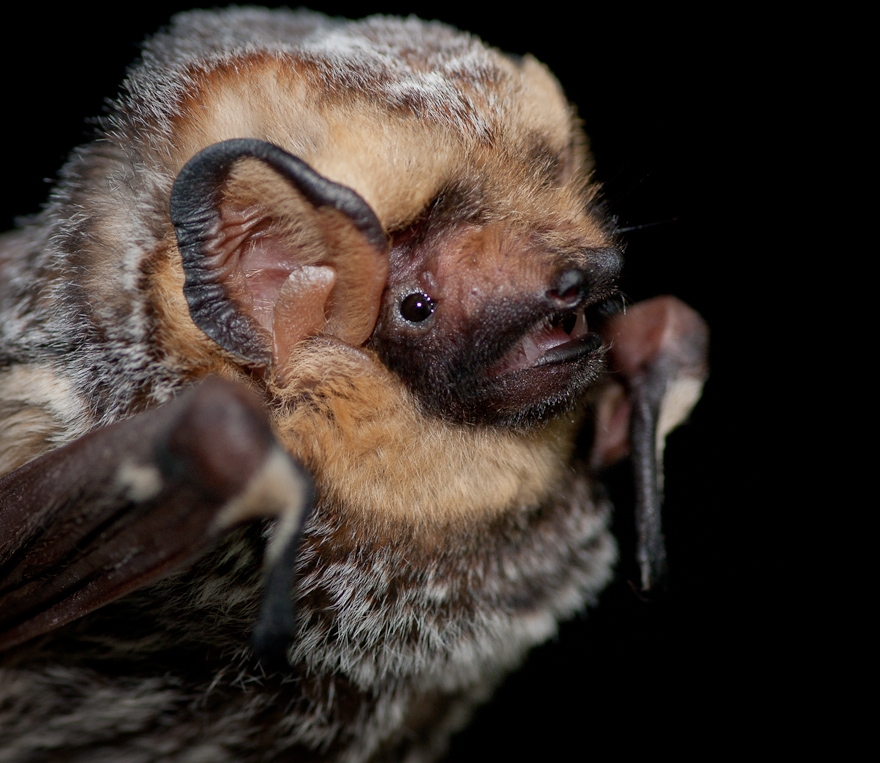


Bats are incredible flying mammals that are important helpers in insect control. A tiny free-tailed bat can eat 3,000 or more insects in one night! There are 14 to 16 bat species expected in the Bay Area, including several protected species, the western red bat, the pallid bat, and Townsend’s big-eared bat.
What metrics determine the health of this indicator?
Metric 1
Maintained within the suite of expected species (excluding rare species) in each subregion to at least 80% of expected bat species (excluding rare ones).
Caution
Unchanging  High
High Metric 1
Maintained within the suite of expected species (excluding rare species) in each subregion to at least 80% of expected bat species (excluding rare ones).
Geographic Area


Condition Thresholds
Good
80% to 100% of the expected species (not those considered rare) are documented in the area of focus and in each subregion each year.
Caution
The percentage of detected expected species is less than 80% and/or decreases by more than 20% (which represents a loss of three species in a single year in any one subregion).
Significant Concern
Significant Concern: Less than 25% of expected species occur within each subregion and/or the number of documented species decreases by more than 40% (the loss of five species) in any one subregion within a three-year period.
Metric Current Health Findings
Current Condition
Current condition is Caution. The most recent data, 2017–2021, indicates that the area of focus and each subregion are below the 80% species detected threshold (“good”) and above the 25% threshold (“significant concern”).
Current Trend
Our trend analysis compared aggregated records of bat species detected from before 2015 to those detected from 2017 to 2021 to determine that overall, trends are Unchanging. The area of focus and the Mt. Hamilton subregion had 100% of expected species detected before 2015 (condition Good). The species-detected percentages in the 2017–2021 date range showed declines, with the exception of the East Bay Hills subregion, which changed from 38% (before 2015) to 62% (2017–2021), showing an Improving trend. However, for this subregion, both 38% and 62% were below the 80% threshold for good condition. The Mt. Diablo subregion had two trends: Improving and Declining. The trend was declining when considering only those species classified with a >75% confidence but improving when using all species detections (including calls classified with lower confidence).
Current Confidence
Confidence is High for all subregions. Data (detections) used for this metric were reliable, recent (in some cases) and comprehensive (covering several areas in each subregion) and represent a long time series; records from the recent past provided a time-series needed to determine trends for the area of focus and the subregions.
Rationale - Why It's Important
Bat species diversity indicates that the ecosystem is providing adequate and varied insect prey and a range of adequate roosting resources. Loss of even a few bat species could indicate the loss of a critical habitat feature or type of prey.
Goal
Species richness within the suite of expected species (excluding rare species) is maintained in each subregion to at least 80% of expected bat species (excluding rare ones).
Baseline Description
To assess the current condition using this metric, we calculated the percentage of species that were detected out of the expected species (i.e., excluding rare species). We divided data from 2004 to 2021 into two timeframes: before 2015 and after 2017. The more recent data included results from EBRPD surveys (2017–2021) and acoustic surveys for the Post-Fire Monitoring Study (2021) conducted in the Mt. Diablo Range subregion (see Metric 2 for methodology and other references for this study). The Post-Fire Monitoring Study detected 10 of the 13 expected species (five species with >75% 353 confidence and an additional five species with <75% confidence in species identification, based on acoustic classification from SonoBat bat call analysis software). In addition to the 10 of 13 expected species, two rare species, Myotis ciliolabrum and Eumops perotis, were detected, as well as Myotis lucifugus (<75% likelihood and difficult to distinguish from other more common Myotis species, based on the sonogram; SonoBat software).
Metric 2
Stable and increasing trends for a few of the common species for each season or for selected seasons.
 Unknown
  Unknown
  Low
Low Metric 2
Stable and increasing trends for a few of the common species for each season or for selected seasons.
Geographic Area
Condition Thresholds
Good
Maintain current or increasing seasonal call rates in each subregion for each key (common) species over the course of three or more years. Small decreases of less than 20% are acceptable.
Caution
Seasonal call rates for two or more common species decrease by 20% but not more than 50% in more than one season from the previous year.
Significant Concern
Seasonal call rates for the majority of common species decrease by more than 50% in more than one season from the previous year.
Metric Current Health Findings
Current Condition
Current condition is Unknown. We are unable to assess condition due to the lack of a three-year time-series data set.
Current Trend
Current trend is Unknown. No time series of seasonal call rates were available to assess condition and trend for this metric.
Current Confidence
Confidence is Low. The activity call rates used for this metric were from two study sites in the Mt. Diablo subregion; these data were recent, reliable, and represent high-quality data. These data do not provide the three-year time series needed to indicate trend. The monitoring data was not comprehensive because call-rate data (a measure of activity) was only available for one subregion. Acoustic bat surveys are planned or underway for all subregions and will provide seasonal call rates to assess condition and trends over time.
Rationale - Why It's Important
Stable abundance of common bat species over time indicates that their environment is providing necessary insect prey and roosting habitats. This can be measured by using call rates for the different species to assess seasonal abundance and to track trends over time.
Goal
Stable and increasing seasonal call rate trends for a few of the common species (recommended species include Myotis yumanensis, Tadarida brasiliensis, and Myotis californicus) for each season or for selected seasons. Species appropriate for sampling site and subregion will be determined based on the findings from the acoustic monitoring. The chosen species should represent bats that are both common and widespread as well as those that are not common but are locally abundant. This way, common species that can represent larger regional and local trends can be selected.
Baseline Description
Seasonal activity rates were measured as “call rate per hour” for three sampling periods (winter, spring, and summer 2021) for two monitoring sites in the Mt. Diablo subregion from the Post-Fire Monitoring Study (EBRPD study, on-going). Pettersson D500x acoustic bat monitors were set at burned and unburned sites for one- to two-week periods, recording five hours each night (2030 to 0130). The collected acoustic files were analyzed to identify species and number of calls per hour (SonoBat bat call analysis software) and data collection at these sites will continue for future comparisons. Seasonal call rates for Yuma myotis, California myotis, Mexican free-tailed, and silver-haired bats were calculated as a benchmark against which to measure seasonal trends in subsequent years at these two sites for the Mt. Diablo subregion. Results from an additional study (G. Reyes, USGS) are pending for monitoring sites in all subregions. Once completed, this study will provide additional benchmarks from other sampling sites. From these studies, benchmarks will be determined the first year of collection and then averaged over three years for each study site.
Metric 3
Counts remain stable for known roosts (“sentinel roosts”) from each subregion.
Unknown
Unknown
Low Metric 3
Counts remain stable for known roosts (“sentinel roosts”) from each subregion.
Geographic Area
Condition Thresholds
Good
Sentinel roost colony sizes are maintained or increase from the baseline over the course of three years; decreases in counts of up to 20% at individual sites and overall are acceptable.
Caution
Sentinel roost colony sizes decrease by more than 20% but not more than 50% from the baseline over the course of three years.
Significant Concern
Sentinel roost colony sizes decrease by more than 50% from the baseline over the course of five years.
Metric Current Health Findings
Current Condition
Current condition is Unknown. Summer Solstice Roost Surveys (2021) were conducted to establish baselines against which future trends can be measured.
Current Trend
Current trend is Unknown. Time series for exit counts were not available to assess trends.
Current Confidence
Current confidence is Low. Monitoring data is recent, reliable, and somewhat comprehensive, and provides a benchmark upon which to measure trend. We have confidence in our recent data, but without multiple years of exit counts from the same roosts, we cannot assess condition, which is predicated on trends.
Rationale - Why It's Important
Annual solstice exit surveys for known roosts provide a measure of roost stability because some roosts are considered critically important to bat populations. A downward trend in annual roost-site exit counts could indicate local bat number declines.
Goal
Emergent counts from annual Summer Solstice Roost Surveys remain stable for known (“sentinel”) roosts in each subregion.
Baseline Description
Sentinel roost sites were selected to establish a baseline emergent count following Summer Solstice Roost Survey methods. These include two sentinel roosts in the East Bay Hills subregion, one sentinel roost in the Mt. Diablo Range subregion, and three sentinel roosts in the Mt. Hamilton subregion. The exit survey results from these locations ranged from a low of three bats in the East Bay Hills subregion to a high of 954 in the Mt. Hamilton subregion. Ideally, in the future, we will be able to add an additional site for the Mt. Diablo Range subregion. Local trends will be determined by conducting annual exit counts at sentinel roosts (following protocols established for the Summer Solstice Roost Survey). This effort will also contribute to a nationwide effort for annual bat monitoring using a standardized survey protocol (G. Reyes, personal communication, May 2021).
About this Indicator
The presence of the full suite of expected bat species, and their abundance, can provide information about the health of local insect populations and the availability of limited, critical habitat features. Of the 14 to 16 bat species expected in this area, the western red bat (Lasiurus blossevillii), the pallid bat (Antrozous pallidus), and Townsend’s big-eared bat (Corynorhinus townsendii) are California species of special concern. Bat maternity roosts also receive some protection under the California Environmental Quality Act (CEQA).
Why is This Resource Included?
Because bats use a variety of roosting sites, they can serve as an indirect measure of limited or patchy habitats, including riparian trees or forests with dense foliage and trees in various stages of decay, wood fall and snags, mines and caves, and rock outcrops. Bats with known roosting preferences can be used as proxies to understand which of these habitat features are available for other taxa that also depend on them. Bats are tied to freshwater sources, even if those sources are small pools of water or springs. Due to their diets, bats can be an indirect measure of insect diversity and abundance. Unfortunately, these insects are negatively affected by widely applied insecticides as well as numerous other stressors. A recent study in German nature reserves found that flying insect numbers may be plummeting by as much as 76% (Hallmann et al. 2017). Other studies show that as much as 40% of insect species are threatened with extinction worldwide, and that they are declining eight times faster than mammals, birds, and reptiles (Sanchez-Bayo and Wyckhuys 2019, Carrington 2019). Bats are highly mobile, widely distributed, and live longer than other similar-sized mammals, their presence (or absence) can also help indicate changes in these resources over time.
Desired Condition and Trend
A healthy, intact ecosystem would support the full suite of expected bat species in each subregion each year. For select common bat species, stable or increasing abundance and activity levels (as measured through seasonal call rates) is maintained in each subregion for each season (fall and winter = migratory and hibernating; spring and summer = breeding and presence of roosting habitat). For select sentinel, or known, roosts, we would hope to see stable or increasing annual exit counts as measured by annual Summer Solstice Roost Surveys. The baseline exit counts for these has been set for six sentinel roosts surveyed for the June 2021 Summer Solstice Roost Survey (two in the East Bay Hills subregion, one in the Mt. Diablo Range subregion, and three in the Mt. Hamilton subregion; see Figure 14.1 at the end of this chapter for locations).
Current Condition and Trend
We used three metrics to evaluate the condition and trend of a suite of bat species within the three subregions of the area of focus. These include species richness (Metric 1), seasonal call rates (Metric 2), and annual roost surveys (Metric 3). We analyzed these metrics using a variety of available data sources including surveys done in individual parks, reservoirs, recreation or management areas, and other open spaces.
Based on these data, we found that the overall condition is “caution” and the trend is “unchanging.” All expected bat species have been documented across the area of focus historically. The most recent dataset from 2017-2021 show declines in species richness in the Mt. Diablo and Mt. Hamilton subregions, but an increase in species richness in the East Bay Hills, when compared to historical data (pre-2017) . We were able to collect data for Metrics 2 (call rates) and 3 (roost surveys) and the results are presented. Condition thresholds are predicated on trends in these metrics to determine if seasonal call rates are stable or increasing for a small number of locally and regionally common species, and if roost exit surveys conducted during the solstice each year show stable numbers for each roost. Because this was the first year, no determination of condition could be made for Metrics 2 or 3, but this year’s data will serve as a benchmark.
A primary goal of the analysis was to provide a benchmark against which managers can measure future changes and understand the likely trajectory of these species. Baseline data and analysis can also be used to identify projects that achieve multiple benefits for bats.
Given the constraint of using only existing and available data, the evaluation also identified areas where not enough is known to draw meaningful conclusions, as well as opportunities for future research and collaboration between land managers. Gaps in our understanding include comprehensive bat monitoring efforts to provide standardized data for each subregion. Basic acoustic monitoring can provide species-detected lists (for Metric 1) and seasonal call rates (for Metric 2). A standard approach to this effort would provide an understanding of the distribution of bat species as well as their seasonal activity rates in a larger portion of the area of focus. These are data gaps that may be areas on which attention should focused in the future.
Stressors
Climate Change
Drought, which has occurred for multi-year periods over the past 10 years, can have deleterious effects on the insect populations that bats rely on for food. Climate change is likely to cause shifts in distribution of bat populations due to shifting prey (insect) populations and changes in local climate conditions at roost sites.
Direct Human Impacts
Wind turbines can cause significant bat mortality (Smallwood and Bell 2020, Thompson et al. 2017, Arnet and Baerwald 2013, and Hayes 2013).
Disease
White-nose syndrome (WNS) is having a significantly negative effect on some bat species.
Fire Regime Change
Wildfires could be decreasing the availability of suitable tree- and snag-roosting habitat.
Habitat Disturbance/Conversion/Loss
Suitable roosting structures, such as bridges, buildings, trees, and other structures, are demolished impacting roosts and reducing availability. Fuel reduction could result in roost disturbance and loss of suitable roosting habitat. Increased urbanization creates more light pollution, which may disturb night roosts. Habitat disturbance has been shown to affect health of individual bats (Seltmann et al. 2017 – Habitat disturbance results in chronic stress and impaired health status in forest-dwelling paleotropical bats.)
Historical Impacts
The removal of older buildings, mine closures, and bridges that served as bat roosts have impacted local bat populations.
Pollution/Contaminants
Insecticides are used in a wide variety of circumstances, particularly in agricultural areas in areas adjacent to Network Partner Lands. Not only could this result in the loss of insect populations, these chemicals can also bioaccumulate in bats, with deleterious effects on their health.
Additional Resources
Other Metrics Considered but Not Included
Recent bat mortality studies at the Altamont Wind Farm were identified as a possible data source (D. Johnston, D. Bell, and S. Smallwood have reports [personal communication, January 2020]) and could be used to create an additional metric. However, S. Smallwood and D. Johnston caution that methods for the Altamont wind-turbine fatality counts vary widely in how they report deaths per kilowatt hour. Additionally, data interpretation can be problematic because reduced mortality may be a function of fewer bats or may be because mitigation efforts to reduce bat death rates were successful. Furthermore, these data are biased toward Mexican free-tailed bats. However, wind energy permits will likely provide an ongoing source of bat information into the future. In addition to bat mortality rates due to wind turbines, data from the Altamount Pass on rates of bats per hour (a measure) could also potentially be used to understand historical trends (S. Smallwood, personal communication, January 2020).
Data Gaps and Data Collection/Management Needs
- Trend and condition data are lacking for Metrics 2 and 3.
- Currently, no call rate data for the East Bay Hills and Mt. Hamilton subregions was available.
- There is currently only one emergent survey location in the Mt. Diablo subregion.
- There is likely little known about bat productivity with the AOF. Future work could identify maternity colonies and attempt to track reproductive rates over time.
- Currently have one year of post-fire monitoring for call rates. Continued monitoring could reveal how bat populations respond to fire.
Past and Current Management
In addition to the acoustic survey results presented here, planned acoustic surveys will establish more baselines for these metrics as additional acoustic sensors in each subregion document species present and call rates.
The North American Bat Monitoring Program (NABat www.nabatmonitoring.org/) uses standardized protocols to gather data through acoustic surveys, summer roost counts, and winter hibernacula surveys. These data are used to measure local, regional, and range-wide changes in bat populations in the U.S., Canada, and Mexico to assess bat-species abundance at multiple spatial scales, see changes in species distribution, and provide regular analyses and reporting on the status of North American bats.
Potential Future Actions
- Work with Network partner agencies to identify bat data being collected and ways to share these data for metrics such as species detections.
- Consider increasing the number of acoustic monitors deployed in the area of focus to gain a better understanding of bat species richness and call rates.
- Maintain buildings, mines, and large trees and erecting proper bat boxes would help ensure the availability of suitable roosting habitat.
- Study the health of specific invertebrate populations that serve as important prey for specific bats in area of focus.
Key Literature and Data Sources
For additional information about this indicator including key literature and data sources see NatureCheck