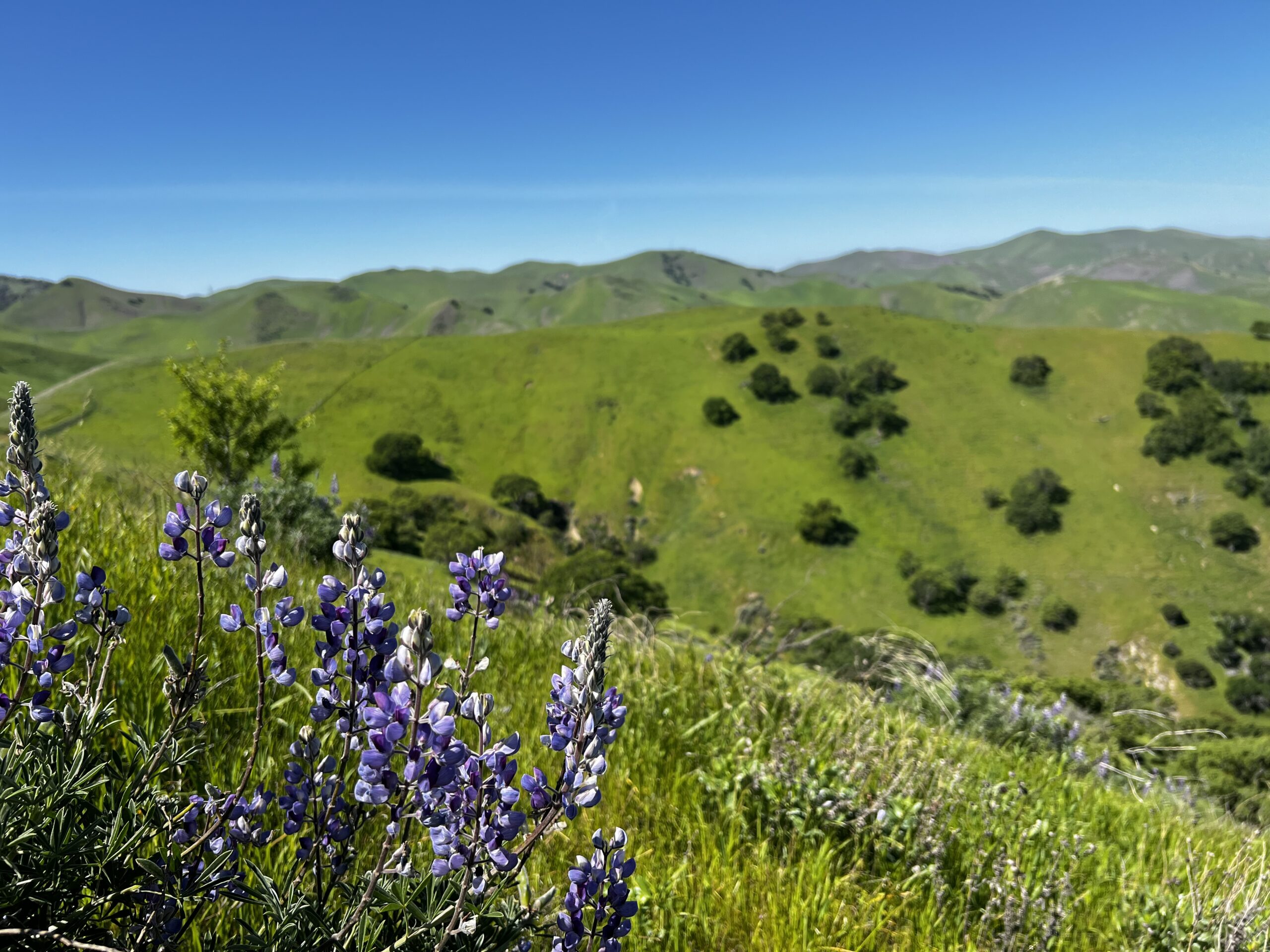
Grasslands
Grasslands are the most common vegetation type within the Area of Focus and are found within EBSN lands. Although grasslands in the region and throughout the state are dominated by non-native plant species, they support diverse ecosystems.
Approximately 90% of species listed in the inventory of rare and endangered species in California occur within grasslands (Skinner and Pavlik 1994). Only a few grassland plant species have gone extinct in California; native species remain rich in number, even when their cover is low individually (Stromberg et al. 2007). Additionally, grasslands support birds, pollinators, and other wildlife that are dependent upon grasslands’ low vegetative height and open structure, as well as the seed, pollen, and forage they provide. Grassland health is an indicator of the health of the plant and wildlife taxa it supports as well as soil and watershed health.
Grasslands provide critical ecosystem services in the Area of Focus, including attenuation of storm water with relatively slow infiltration rates, and improvement of water quality through filtering of pathogens, nutrients, and sediments (Mooney and Zavaleta 2016). They also provide a relatively high rate of carbon storage per unit area based on plant community composition, clay content, litter cover, and potentially management (Silver et al. 2010, Booker et al. 2013, Conant et al. 2001). Grasslands are more likely to remain carbon sinks than forested lands (Dass et al. 2018). Within grasslands, native perennial grasslands sequester greater levels of carbon over annual grasslands, and both types of grasslands sequester greater levels of carbon than developed croplands (Koteen et al. 2011, Conant et al. 2001).